

Flyers battle back, unleash season-high 32 shots, but Ducks rally to hand Philadelphia a gut-wrenching 5-4 defeat
The Philadelphia Flyers came into Anaheim riding the momentum of a three-game winning streak. They left with a painful reminder that in the NHL, no lead is safe, no opponent is finished, and a battle is never won until the final horn sounds.
On October 24, the Flyers threw punches, answered challenges, and showed off some serious offensive firepower. Matvei Michkov struck twice, Porter Martone found the net on the power play, and Tyson Foerster delivered a shorthanded goal. Philadelphia generated a season-high 32 shots on goal, but despite the fight, the Anaheim Ducks rallied for a 5-4 victory, snapping the Flyers' winning streak.
The Flyers brought the fight. The Ducks delivered the final blow.
A POWER-PLAY EXPLOSION IGNITES THE BATTLE
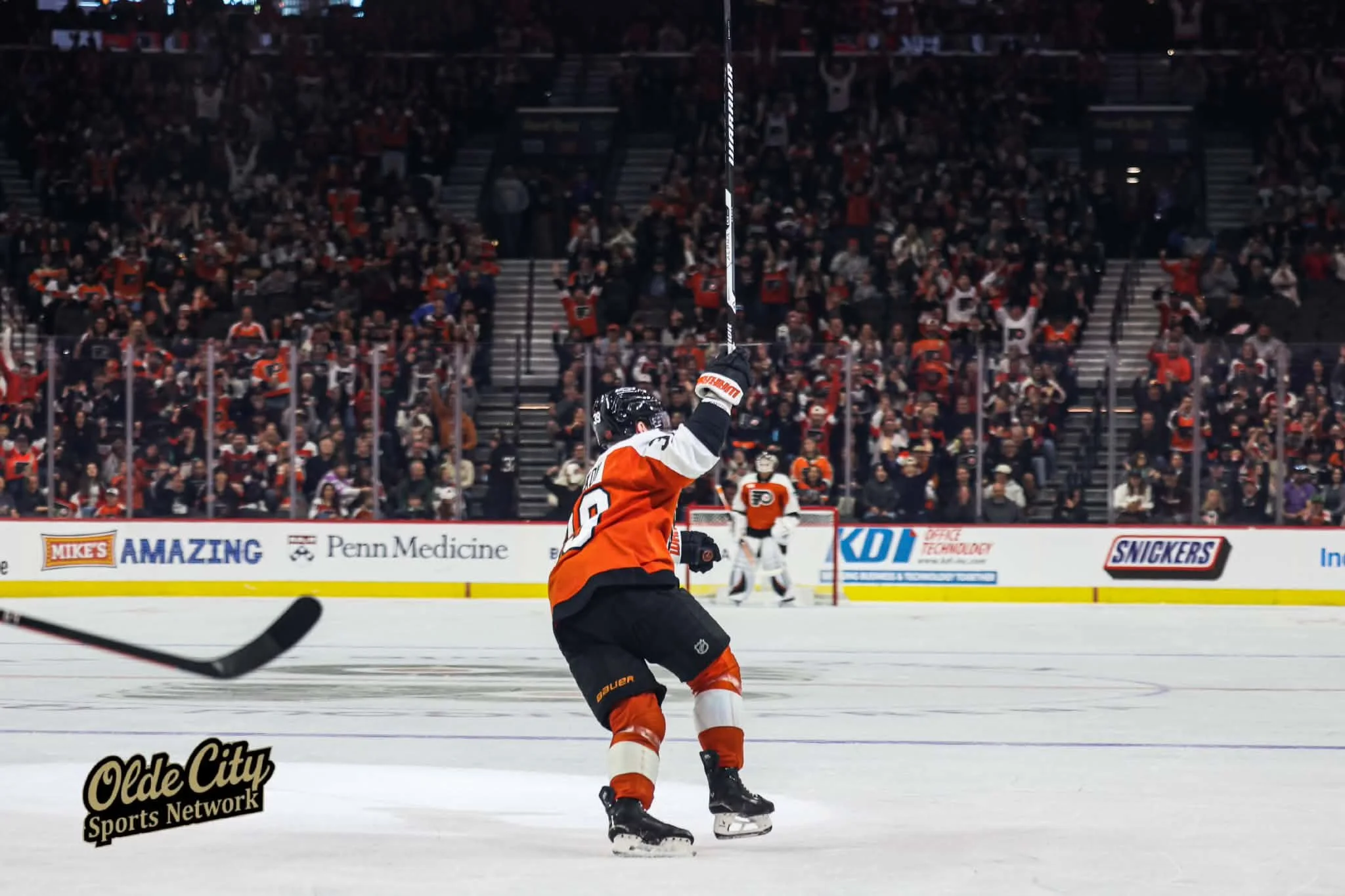
Philadelphia came out looking to impose its will, and the power play provided an early spark. Michkov and Martone scored power-play goals just 1:03 apart, giving the Flyers multiple power-play goals in a game for the first time this season.
For a team looking to build consistency and establish its identity, that development matters. The Flyers showed they could capitalize on special-teams opportunities, and the young offensive talent continued to make its presence felt.
Michkov was at the center of the action, scoring twice to record his second multi-goal performance of the season. His team-leading eighth goal reinforced what Flyers fans have been waiting to see: a young offensive weapon capable of changing a game in a matter of seconds.
The second goal was about more than just putting the puck in the net. Michkov reached 123 career points, tying Ron Sutter for the fifth-most points in franchise history by a player aged 21 or younger. Only Eric Lindros, Peter Zezel, Simon Gagne, and Bill Barber sit ahead of that mark.
That's some impressive company. The Flyers need Michkov to keep attacking, keep creating, and keep becoming the kind of player opponents have to game-plan around every single night.
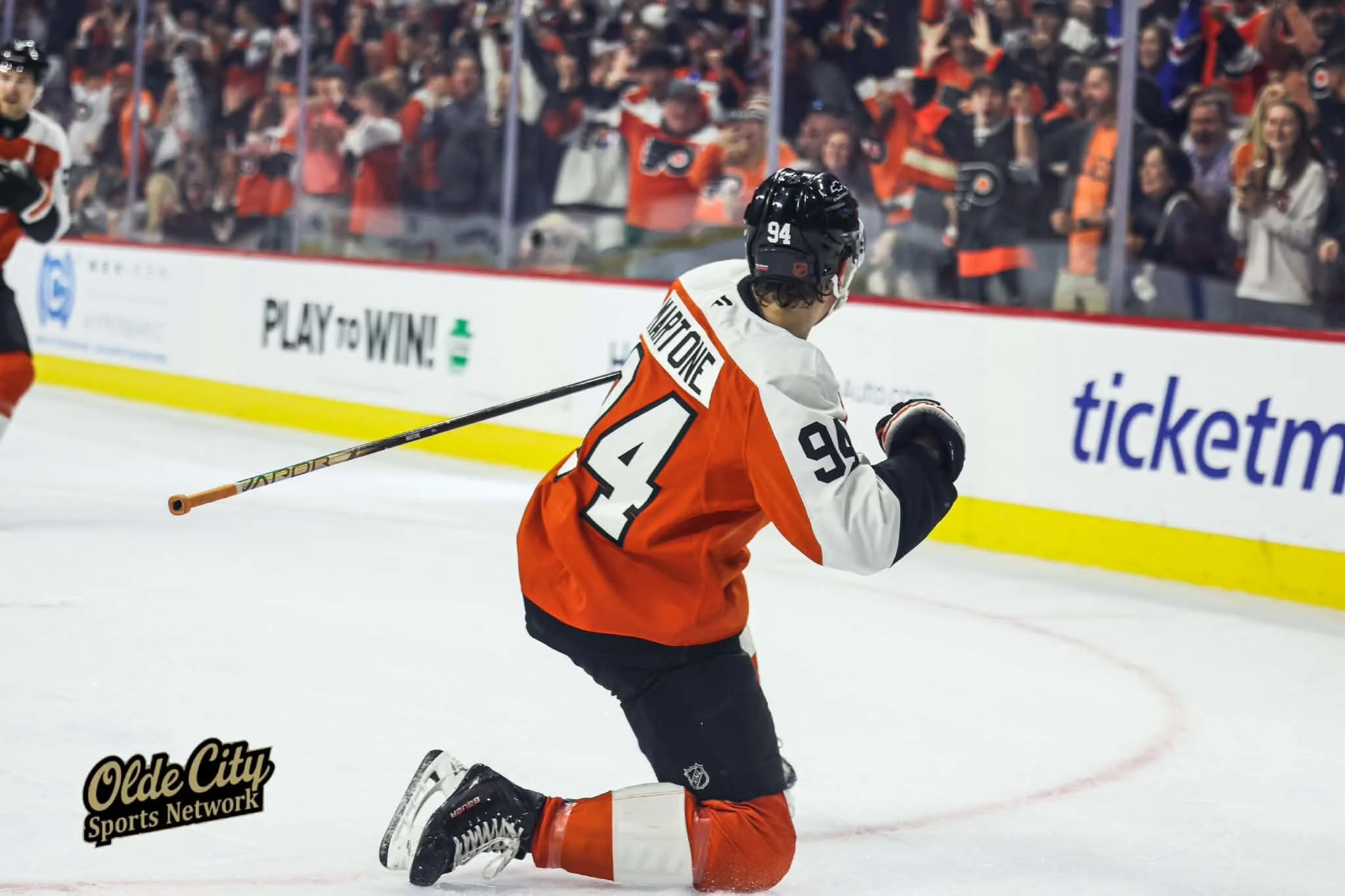
Martone's power-play strike added another encouraging chapter to his development. These are the moments that build confidence, and Philadelphia needs its young players to turn opportunities into lasting production.
FOERSTER GOES SHORT-HANDED — AND THE FIGHT CONTINUES
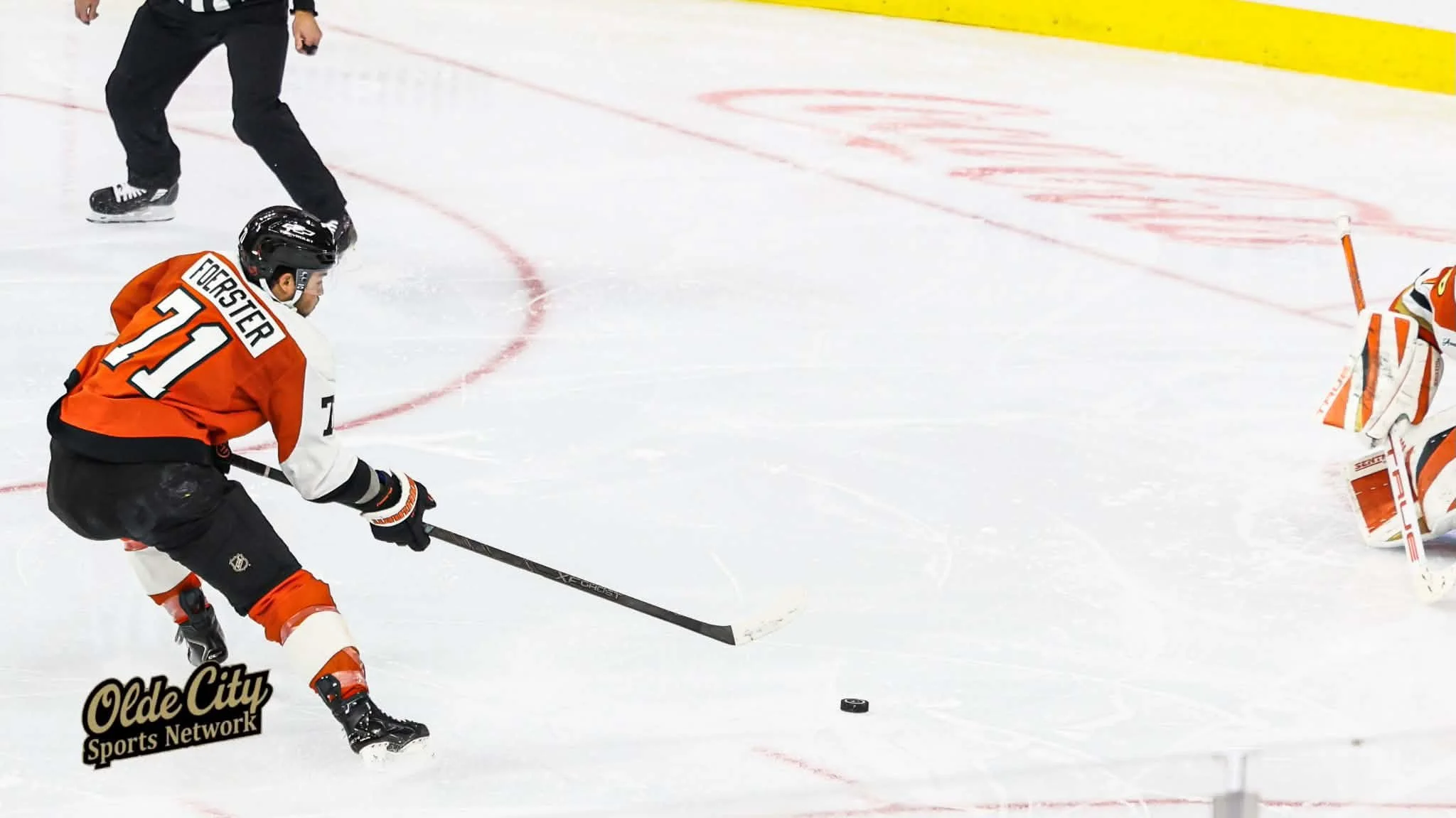
When a game starts swinging in the wrong direction, teams need someone willing to step up and deliver a response. Foerster did just that, scoring Philadelphia's first shorthanded goal of the season.
It was the second shorthanded goal of his career, with his previous one coming on March 14, 2024.
A shorthanded goal can change the temperature of a game. It takes pressure, discipline, and the ability to recognize an opportunity when the odds are stacked against you. Foerster found that opportunity and gave the Flyers another reason to believe they could come away with two points.
But the problem was what happened around those individual moments of brilliance.
Philadelphia entered the third period with the game still there to be won, yet Anaheim continued to find answers. The Ducks scored three times in the second period and twice more in the third, turning a game in which the Flyers had built a promising position into a frustrating defeat.
The Flyers scored four goals. They received production from multiple key contributors. They generated more shots than they had in any game this season.
And they still couldn't close the deal.
ZEGRAS KEEPS PRODUCING
Trevor Zegras continued to give Philadelphia a reason for optimism, recording two assists to extend his point streak to four games. Over that stretch, he has collected seven points — two goals and five assists.
That kind of production is exactly what the Flyers need from their offensive leaders. Zegras is creating opportunities, helping teammates find the scoresheet, and giving the attack another dimension.
With Michkov producing, Martone contributing, and Foerster finding the net, there are legitimate signs of an offense capable of making noise.
The challenge now is making that production count for more than an entertaining scoreboard.
The Flyers cannot expect to win consistently by simply trying to outscore their mistakes. Offensive bursts are valuable, but they must be supported by defensive structure, timely stops, and the ability to shut down an opponent when the game reaches its most critical moments.
FOUR GOALS SHOULD MEAN SOMETHING
Philadelphia's season-high 32 shots on goal represented a step forward offensively. The Flyers put pucks on net, found power-play success, and received contributions from several different players.
But Anaheim's five-goal response exposed the other side of the equation.
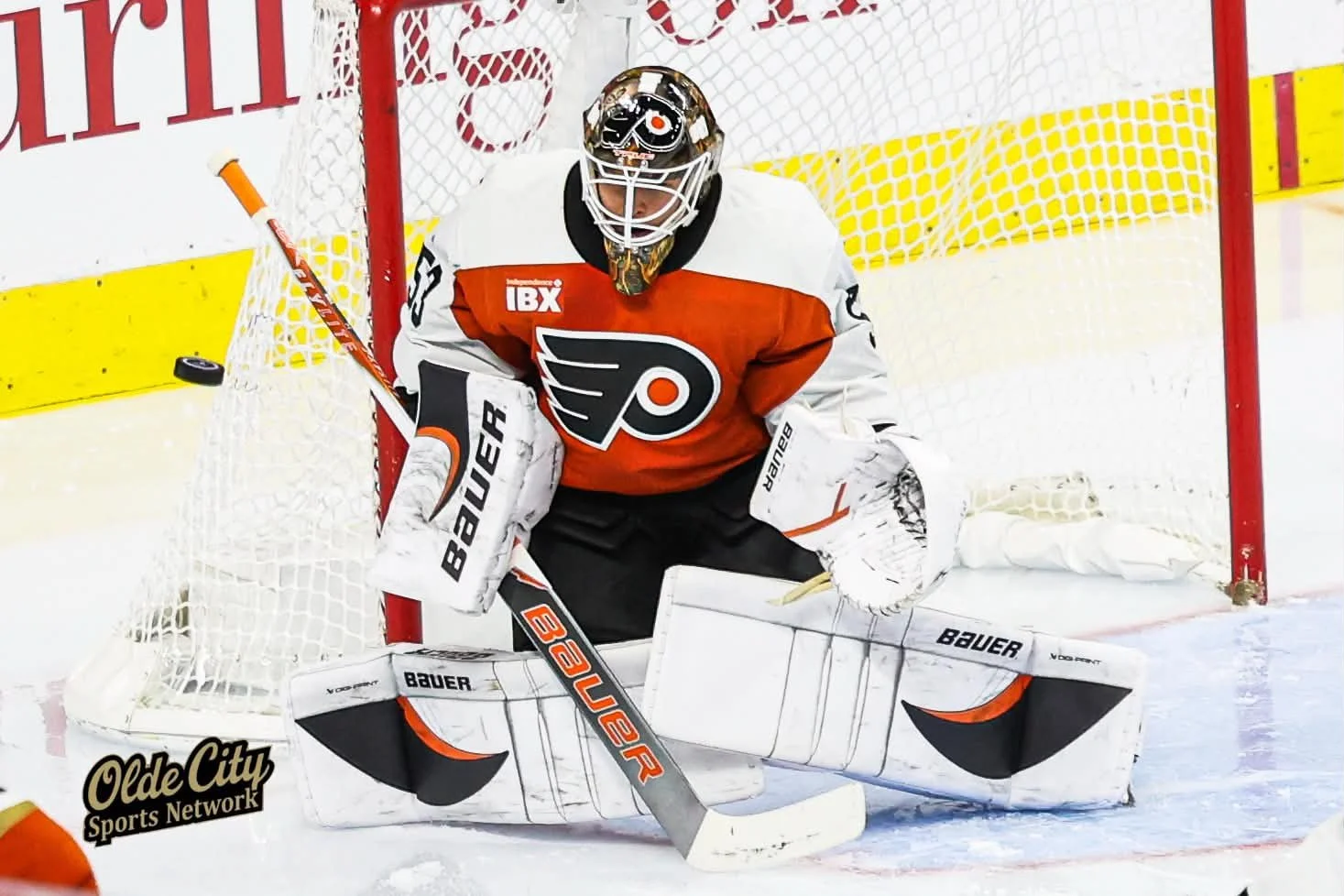
Goaltender Ivan Fedotov Woll — listed as Woll in the game report — stopped 21 of 26 shots, while Ducks goaltender Lukas Dostal finished with 28 saves on 32 shots. The numbers tell part of the story, but they don't tell the whole story of how a team allows a lead to slip away. Defensive coverage, missed assignments, and the inability to stop an opponent's momentum can all contribute to a result like this.
Philadelphia needs to examine how Anaheim generated its chances and why the Flyers couldn't regain control after the Ducks started rolling.
This is where the battle becomes mental as much as physical. A team can trade goals and trade momentum, but eventually somebody has to slam the door shut.
The Flyers couldn't do it on this night.
THE WINNING STREAK IS OVER. THE SEASON ISN'T.
Let's be clear: one loss doesn't erase the progress Philadelphia made during its three-game winning streak. Michkov's continued production is encouraging. Martone is contributing. Foerster found the back of the net while shorthanded. Zegras is riding a four-game point streak. And the Flyers generated a season-high number of shots.
There are positives to take away from Anaheim.
But there is also a reality check.
You cannot give up five goals and expect four goals of your own to be enough every night.
The Flyers have to turn their offensive energy into complete performances. They need to recognize when an opponent is building momentum, respond with greater urgency, and find a way to protect their advantage instead of getting dragged into a back-and-forth shootout.
The fight was there. The firepower was there. The opportunity was there.
The finish wasn't.
Philadelphia falls to Anaheim, 5-4, and watches its three-game winning streak come to an end. Now comes the important part: how the Flyers respond.
Because a battle-driven team isn't defined by never taking a punch. It's defined by how it answers the next one.
And the Flyers have another fight waiting for them.
Jesse Bell / Olde City Sports Network
Photos Credit / Matt Perretta / Olde City Sports Network