

Reactions to the 2026 Philadelphia Eagles 53-Man Roster
The Philadelphia Eagles officially unveiled their initial 53-man roster Sunday night, and while there were plenty of expected decisions, there were also several surprises that caught fans—and admittedly myself—off guard. Here’s what stood out the most.
Jonathan Greenard’s Status Is a Huge Win
Perhaps the most encouraging development from the roster announcement was seeing newly acquired edge rusher Jonathan Greenard ncluded on the initial 53-man roster instead of being placed on the Physically Unable to Perform (PUP) list.
That decision keeps the door open for Greenard to return as early as Week 1. Had he landed on the PUP list, NFL rules would have forced him to miss at least the first four games of the season.
That’s significant for Philadelphia.
With an early-season matchup against the LA Rams, every available pass rusher could make a difference. If Greenard is healthy, the Eagles could field an impressive defensive front featuring Greenard and Jalyx Hunt on the edge with Jalen Carter and Jordan Davis controlling the interior.
On paper, that’s one of the more physically imposing fronts in the NFL—and one opposing offensive lines won’t enjoy facing.
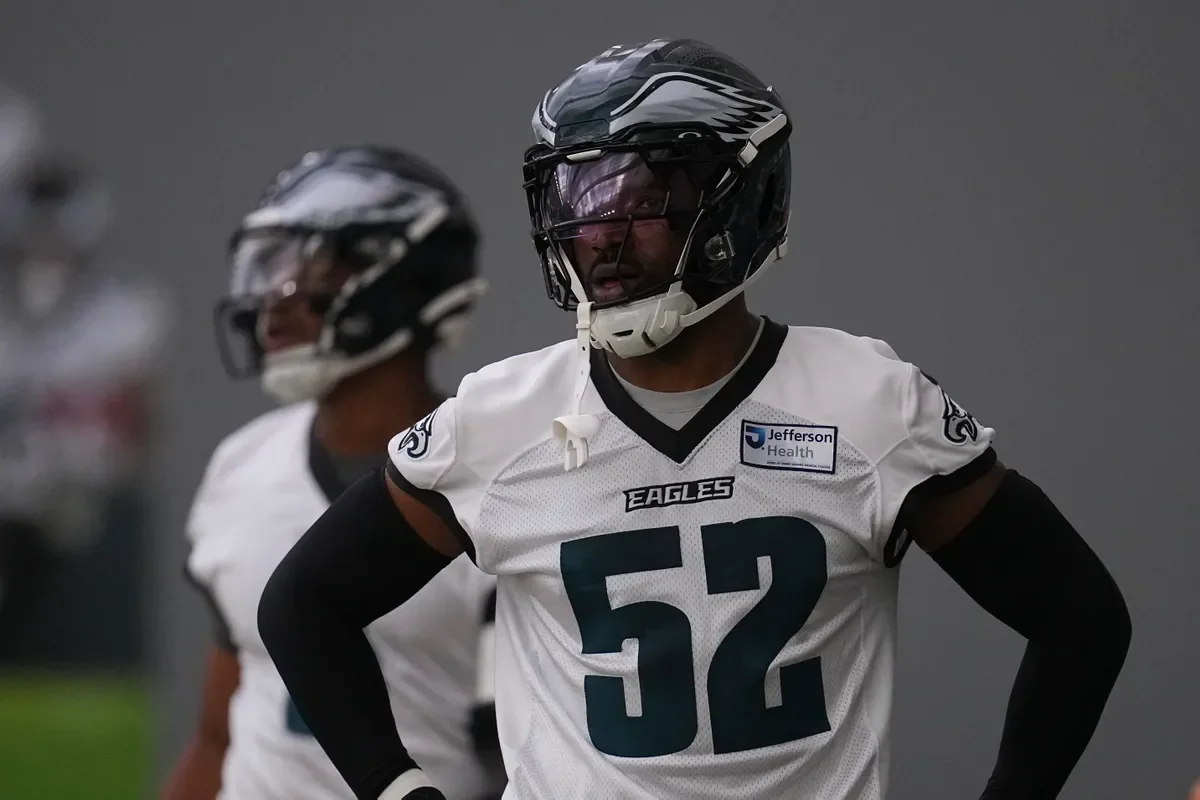
Four Quarterbacks and Four Tight Ends? That Was Unexpected.
One of the biggest surprises was how the Eagles constructed their offensive depth.
I didn’t expect the team to keep four players at quarterback, running back, or tight end. If I had guessed one position group would carry four players, I would’ve picked running back.
Instead, Philadelphia kept four quarterbacks and four tight ends.
Keeping four quarterbacks suggests the organization may still be evaluating its quarterback depth chart behind Jalen Hurts. It also could indicate the Eagles wanted to avoid exposing Cole Payton to waivers, believing another team may have claimed him.
Even so, I expected another move—perhaps shipping veteran Andy Dalton elsewhere—to balance the roster elsewhere.
The tight end room was equally interesting.
Reports indicate that Stowers is currently dealing with an injury, and Philadelphia chose not to add another tight end to the practice squad. That decision suggests the coaching staff wanted a security blanket at the position on the active roster.
I originally believed Cameron Latu would have earned the final spot because of his versatility. His hybrid tight end/fullback skill set and strong blocking made him valuable on special teams last season. Instead, the Eagles kept EJ Jenkins.
From everything coming out of training camp, that decision makes sense. Jenkins reportedly transformed his game during the offseason, becoming a much more complete tight end. Multiple observers even noted his improvement as a blocker, with some suggesting he outperformed veteran Johnny Mundt in that area throughout camp.
If Philadelphia is serious about re-establishing the physical running game that defined portions of its 2024 success, having another capable blocking tight end could prove extremely valuable.
Whether the Eagles eventually utilize Jenkins in a fullback-type role remains to be seen, but his development clearly impressed the coaching staff.
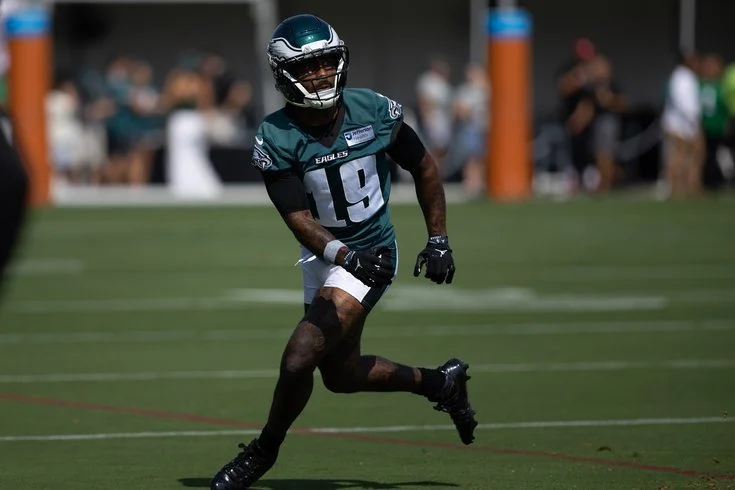
Elijah Moore Wins the Final Receiver Spot
Another roster battle that caught my attention was the final wide receiver position.
I spent most of camp going back and forth between Elijah Moore and Britain Covey.
Initially, I leaned toward Moore because of his pure receiving ability before shifting toward Covey late in the preseason because of his versatility.
Turns out my first instinct was correct.
With Covey landing on the practice squad, rookie WR Makai Lemon still adjusting to the NFL, and Cooper DeJean already handling multiple responsibilities on defense, it wouldn’t be surprising if the Eagles envision Moore contributing as both a receiver and a return specialist, unless they decide to seek a player from the practice squad for this role.
Moore has reportedly put in significant extra work throughout camp, including training alongside Cooper DeJean and Saquon Barkley. His dedication has been evident, and now he’ll have an opportunity to translate that work onto the field.
A Surprisingly Offense-Heavy Roster
Another interesting takeaway was the overall roster construction.
Philadelphia elected to carry 27 offensive players, 23 defensive players, and three specialists.
Given some of the inconsistent performances from the defensive depth throughout the preseason, I actually expected the Eagles to keep an extra defender instead.
However, the lighter defensive roster may have been intentional.
The front office has consistently shown confidence in its ability to identify developmental talent after roster cutdowns. By keeping flexibility on the defensive side, Philadelphia may have positioned itself to take advantage of waiver claims, practice squad additions, and future elevations throughout the season.
Michael Roscoe / Olde City Sports Network
Photo Credit / Philly Voice
Photo Credit / Eagles Wire
Photo Credit / Philadelphia Eagles