

Caution Lights Flashing
The Philadelphia Flyers left Detroit with a 2–1 loss on October 15, and while the final score suggests a tightly contested game, the bigger picture deserves a much closer examination. This was not simply a case of a team coming up one goal short. It was another opportunity to question the discipline, decision-making, and readiness of certain players who are supposed to help Philadelphia move forward.
Matvei Michkov did his part, scoring his third goal of the season to open the scoring and move into the team lead. Unfortunately, the Flyers could not turn that early advantage into a victory. Adam Johansson and Andrew Copp scored for Detroit, while goaltender Daniil Tarasov stopped 17 of Philadelphia’s 18 shots. On the other end, Joseph Woll stopped 24 of 26 shots in the loss.
The Flyers were close enough to win. That is precisely what makes this result frustrating.
Tyson Foerster’s penalty problems are becoming a serious concern.
There is a difference between playing hard and repeatedly putting your team in difficult situations. Foerster needs to understand that distinction.
Penalty trouble is not an isolated inconvenience when it becomes a recurring issue. Every unnecessary trip to the penalty box places additional pressure on the penalty kill, forces teammates to expend energy defending instead of attacking, and potentially shifts momentum toward the opposition. For a team trying to establish consistency, those mistakes can become costly habits.
Foerster has to recognize that his responsibilities extend beyond generating offense. He must be available to his teammates, make smarter decisions, and avoid giving opponents opportunities they have not earned at even strength.

The Flyers cannot afford to keep treating repeated penalties as a minor issue. If Foerster is going to be an important part of this team's future, discipline must become part of his game. Talent is valuable, but talent that repeatedly puts a team at a disadvantage comes with a price.
To be clear, the available game notes do not provide Foerster’s penalty total from this contest, so it would be unfair to attribute the Detroit loss directly to a specific penalty or claim that his infractions decided the outcome. However, if his recurring penalty problems continue, the coaching staff must seriously evaluate what needs to change.
At some point, accountability has to mean more than acknowledging the problem after the final horn.
David Jiricek and the uncomfortable question of NHL readiness
Then there is David Jiricek, whose readiness for the NHL deserves serious scrutiny.
The NHL is not a development league where a player can simply learn through unlimited mistakes without consequences. Young defensemen need time to adjust, but there is a difference between making understandable growing pains and demonstrating that a player is not yet prepared for the demands of the position.
Defense is particularly unforgiving. Positioning, puck management, reading the opposition, and making decisions under pressure all matter. A defenseman can possess impressive physical tools and potential, but those qualities alone do not guarantee NHL readiness.
Jiricek must demonstrate that he can handle the pace and responsibility of the league consistently. If he is struggling to make the necessary adjustments, Philadelphia must be willing to consider whether additional development time would serve him better than keeping him in a role he is not ready to handle.
That is not a declaration that Jiricek cannot become an effective NHL defenseman. It is a reminder that potential and readiness are two entirely different things.
The Flyers cannot afford to confuse the two.
The available notes do not detail Jiricek’s individual performance against Detroit, so a definitive judgment on his play in this particular game would require additional evidence. Nevertheless, the organization must be honest about what it sees on the ice. If the performances are not meeting the required standard, reputation, draft pedigree, and future promise should not shield a player from a difficult evaluation.
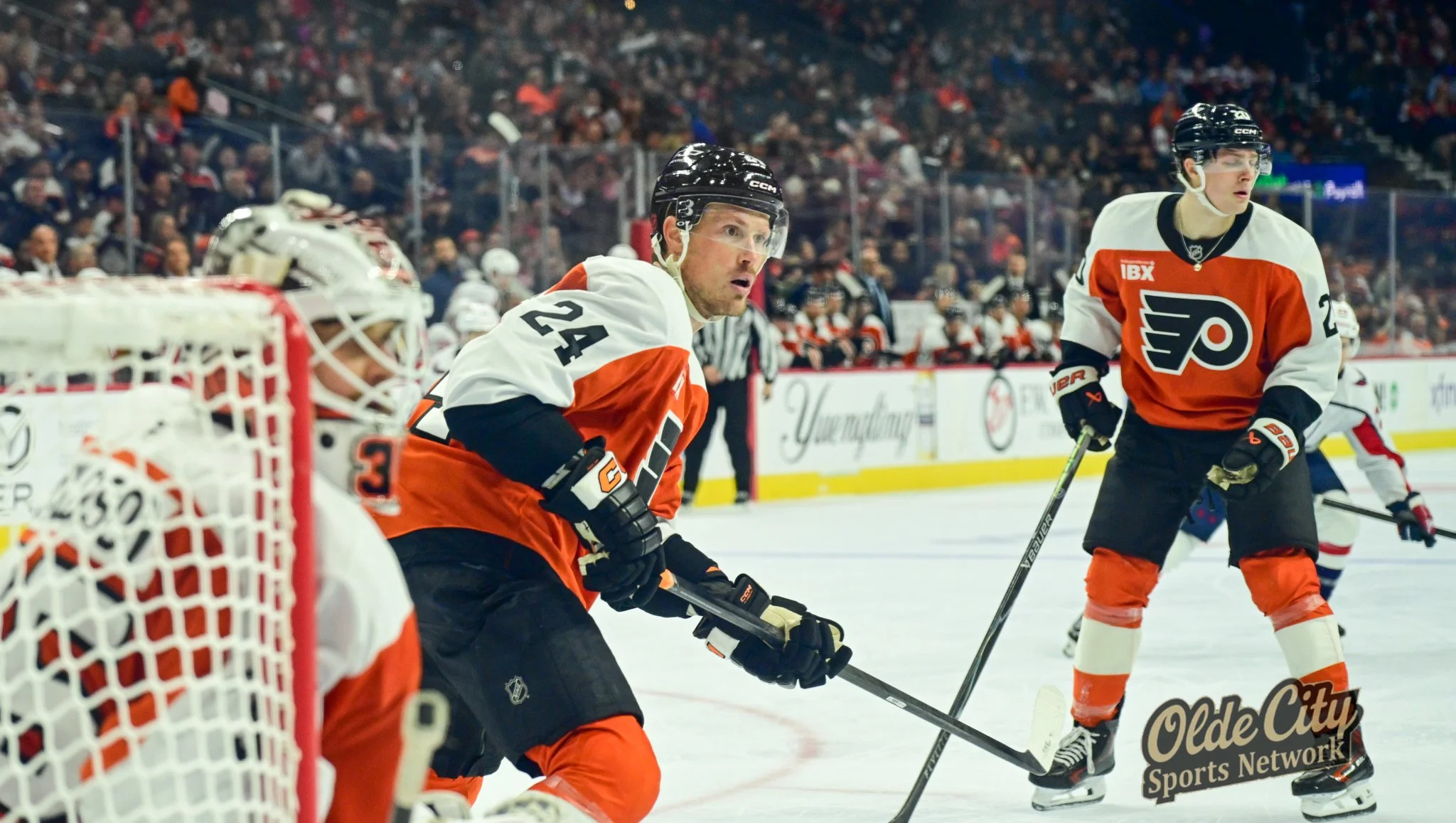
Michkov provides the offense, but one goal is not enough.
There was at least one encouraging development. Michkov found the back of the net for the third time this season, giving Philadelphia an early lead and continuing to demonstrate his offensive importance.
Sean Couturier also matched his season high with 14 faceoff wins, providing a positive contribution in the middle of the ice.
Those are useful signs, but they do not erase the larger concerns. Michkov cannot be expected to provide the offensive spark every night while the rest of the team struggles to turn opportunities into results. Philadelphia managed just 18 shots against Detroit, and Tarasov stopped all but one of them.
The Flyers need more consistent offensive pressure, smarter decisions, and a collective commitment to playing a complete game. When the margin for error is this small, avoidable mistakes and a lack of execution become magnified.
The warning signs are there. Will Philadelphia respond?
One loss in October does not define a season. The Flyers still have time to correct problems, develop their young players, and establish a more dependable identity. But dismissing every disappointing result as an early-season learning experience would be a mistake.
Foerster must take greater responsibility for his discipline. Jiricek must demonstrate that he is prepared to handle NHL responsibilities, and the coaching staff must be willing to make difficult decisions if he is not. The team as a whole must find a way to generate more offense and protect its opportunities.
These are not unreasonable expectations. They are the standards required of a team that wants to take meaningful steps forward.
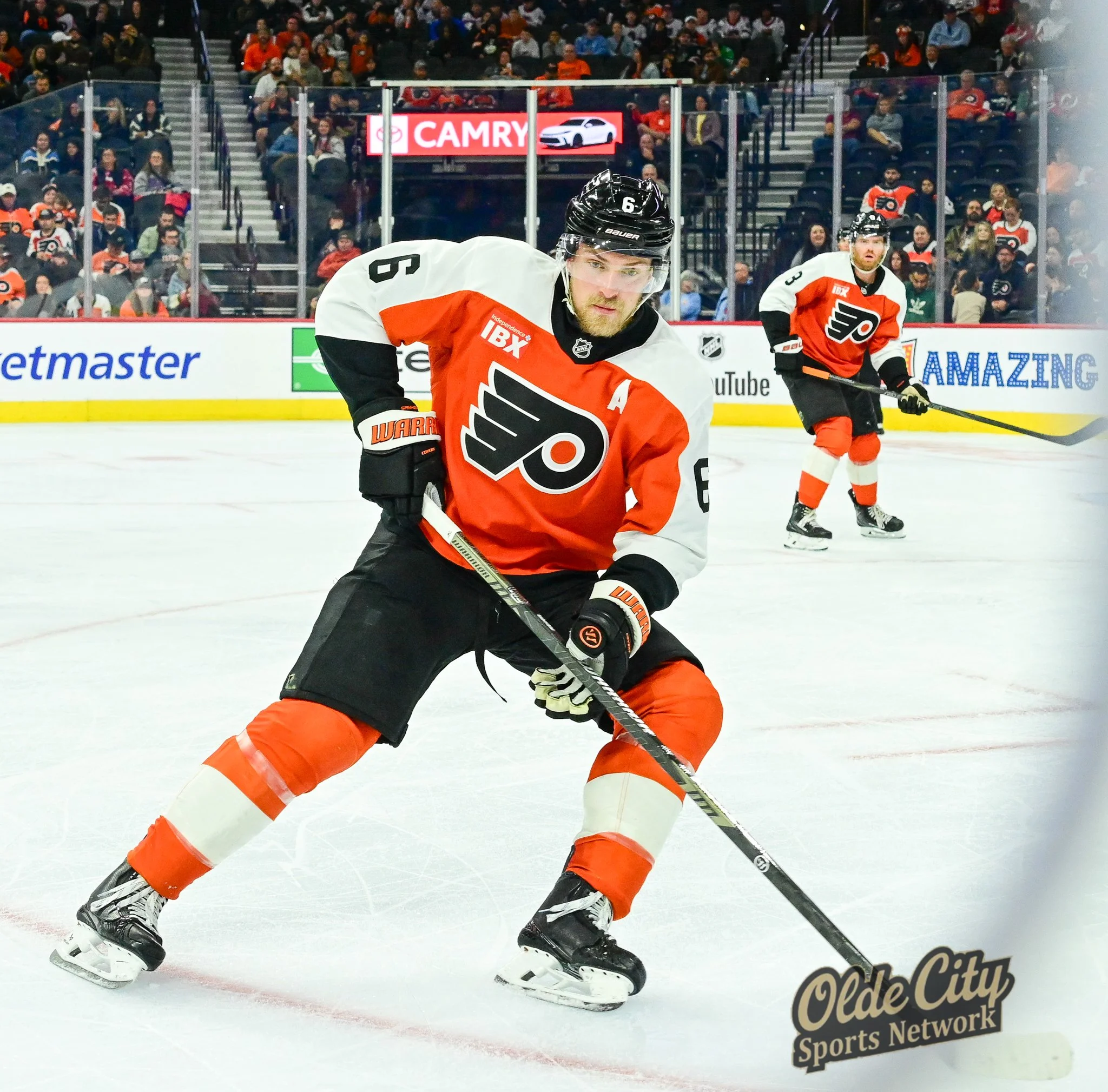
Philadelphia returns to Xfinity Mobile Arena on Saturday to face the Ottawa Senators at 7 p.m. ET. That game offers an immediate opportunity to respond, but the response must be visible in the details: disciplined shifts, responsible defensive play, and a more consistent attack.
The caution light is flashing, not because the season is lost, but because the Flyers cannot afford to ignore the same concerns while expecting different results.
Potential is not progress until it produces results. Hard work is not enough without discipline. And development cannot become an excuse for leaving players in situations they are not yet equipped to handle.
The Flyers have work to do. The question is whether the players and the coaching staff are prepared to confront these issues now, before small problems become much bigger ones.
Jesse Bell / Olde City Sports Network
Photos Credit / Melissa Molyneux / Olde City Sports Network